


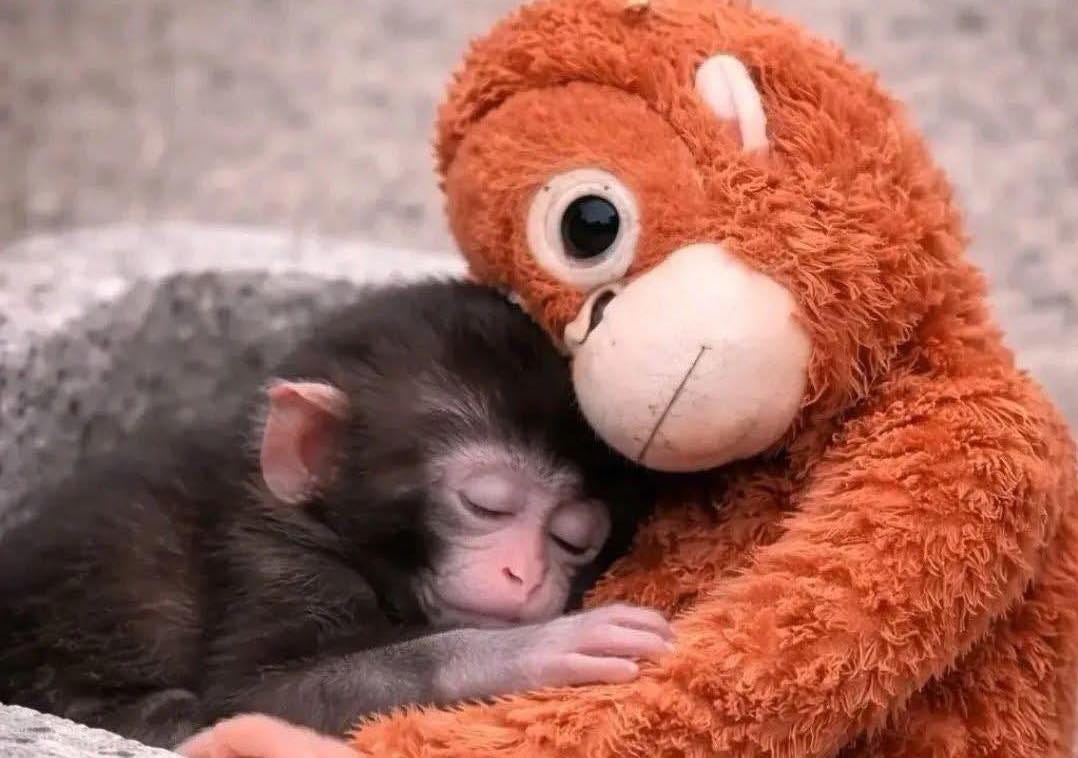
if you don’t know who Punch is or just have some vague idea about him, let me bring you up to speed.
punch is the name of the monkey that’s just 6-months old. he was born in july 2025 and was abandoned by his mother at birth. the zookeepers who raised him gave him an ikea plushie of an orangutan: a toy monkey that’s soft, has long hairs and is easy for tiny fingers to hold onto.
the zookeepers named the toy ‘ora mama’.
ora mama is like a surrogate mother for punch (the monkey). he sleeps with her, plays with her and buries his face into her fur when the world gets too much to handle. he finds comfort in her because that’s the only creature that hasn’t hurt her and he has full control over her.
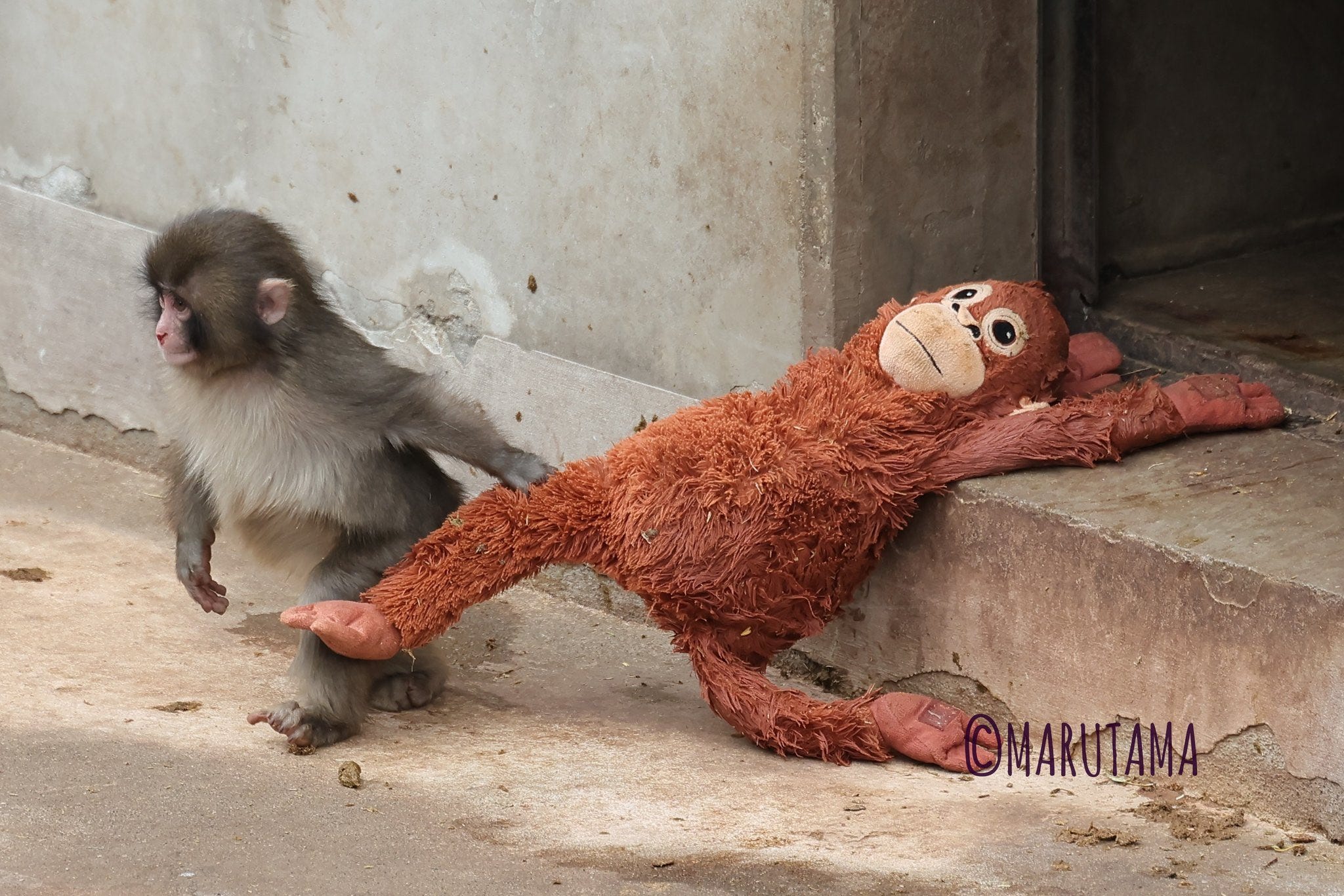
punch went viral on the internet when he tired to communicate with other monkeys but got bullied by older monkeys.
you see, among japanese macaques, social hierarchy is everything. young monkeys learn by observing their mothers: who grooms whom, who defers to whom, who belongs. when punch was introduced to the zoo’s monkey mountain in january, he lacked that social roadmap since birth.
so that’s why you can see in the videos, how he cautiously approaches other monkeys only to be swatted away or ignored.
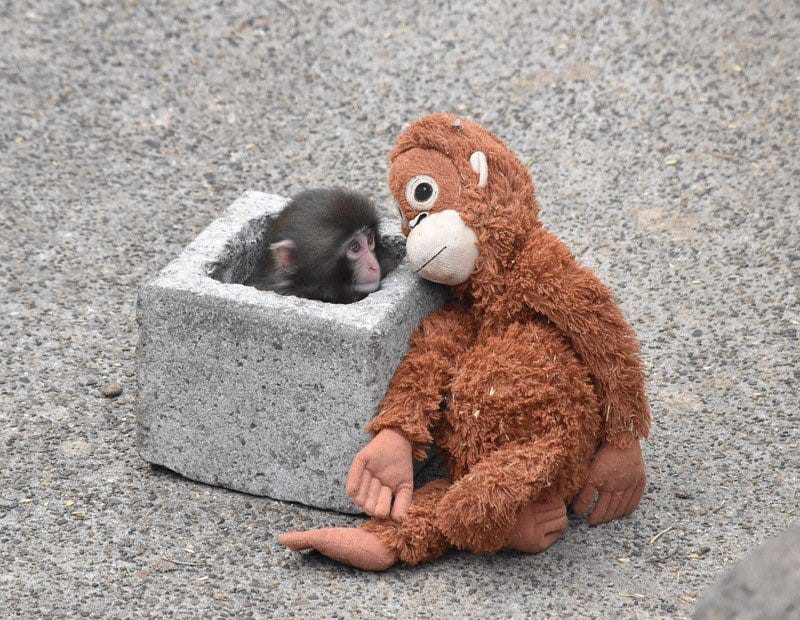
when I first saw punch fighting his battles with older monkeys and taking comfort in the soft toy. i cried.
i cried because that feeling of abandonment, fighting your battles alone, not having friends, seeking comfort, wanting comfort so badly that you’ll take it from anything that doesn’t hurt you... all of it felt like a punch in the gut.
punch didn’t go viral because the internet suddenly developed a conscience about animal welfare. animal kingdom brutality isn’t anything new to us, we’ve all sat through nature documentaries where far worse things happen. but they don’t make a dent in our lives because we don’t relate to it.
punch tells us a relatable story.
he is the hero we can root for. he is the hero who is beaten up by the circumstances: mother abandoned him, older monkeys pick on him. he lives like as if he is an orphanage. a few people comfort him but that innate need of someone or something that can curb away his loneliness.
in spite of all this, our ideal hero... he survives. he wakes up everyday, and he fights and saves himself and his one toy.

we see ourselves in him. the kid who ate lunch alone and pretended to read so it looked like a choice. the adult who feels a flicker of panic when a text goes unanswered for too long.
we don’t care about punch because he is suffering. we care about him because his suffering has a shape that we recognize.

the emotional needs
in 1958, harry harlow ran one of the most disturbing experiments in behavioral science. he took baby monkeys from their mothers at birth and placed them in an enclosed space with two surrogate “mothers.”
one was built with cold wire mesh but had a feeder attached to it. the other one was a monkey shaped doll, wrapped in soft terry cloth. warm and huggable but completely useless for feeding.
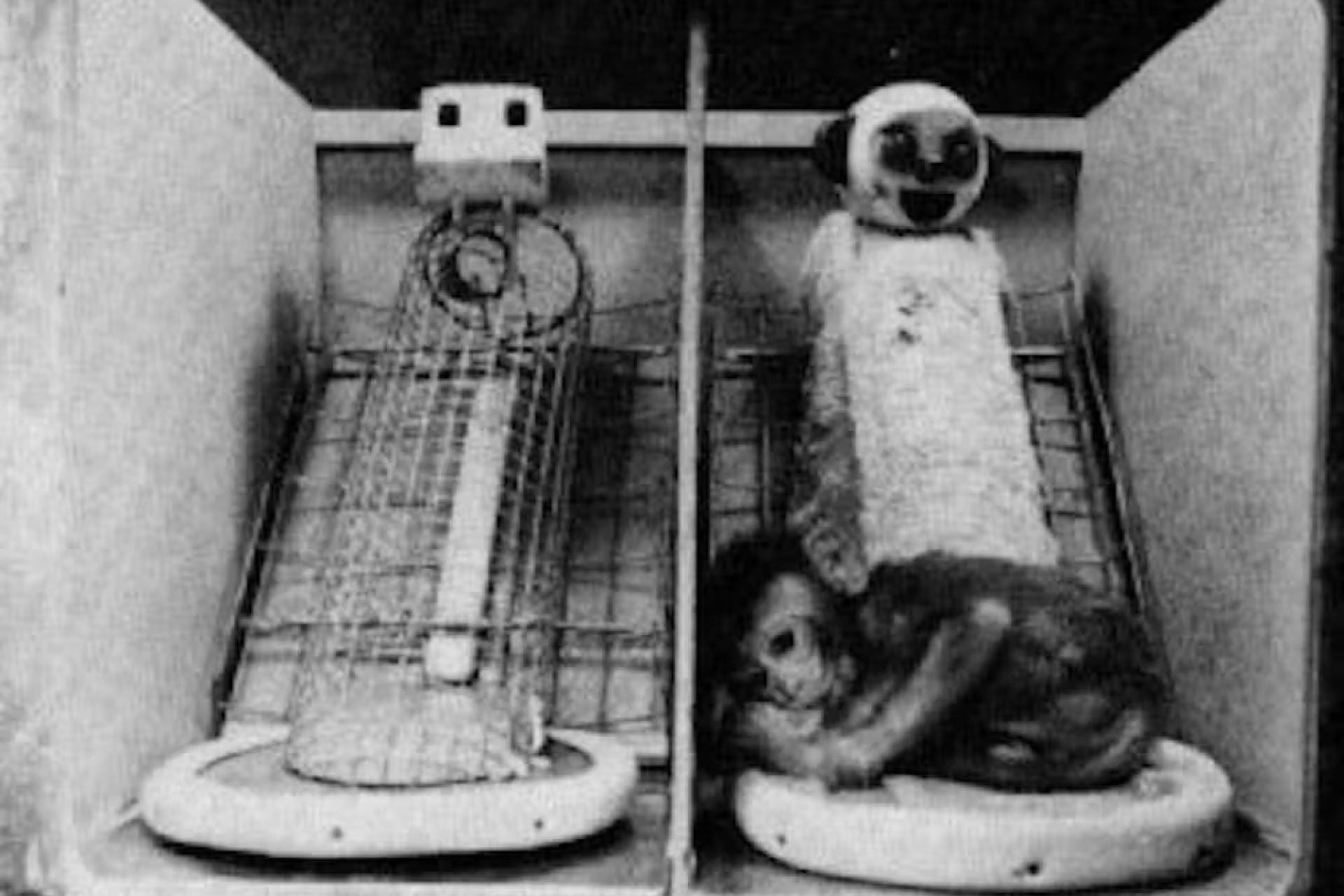
the theory at the time was simple: babies form attachment to those who provide them with biological needs, such as food and shelter.
harlow challenged this theory by suggesting babies need care, love and kindness to form attachments.
harlow was right.
the babies spent 70% of their day clinging to the clothe mother and visited the wire one only when hungry.
turns out love is not a by product of being fed. just because parents provide for their children. it doesn’t mean they give them love too. love is a need in itself.
punch is living this experiment in real time. the plush toy doesn’t give him food or protection from the older monkeys but she is soft. she is always there and she has never once pulled away from him.
response from the zoo
people demanded punch to be separated from the troop. they called it cruelty. they wanted intervention. some even wanted to adopt him as a pet.
the zoo’s response was much more thoughtful than the outrage it was answering.
they explained that mother-infant rejection is a documented natural behaviour in wild japanese macaque populations, especially among very young or stressed mothers. if this had happened in a forest instead of a zoo, punch would almost certainly be dead within days. just a baby monkey who didn’t make it. which is, statistically, how most of these stories end when we’re not watching.
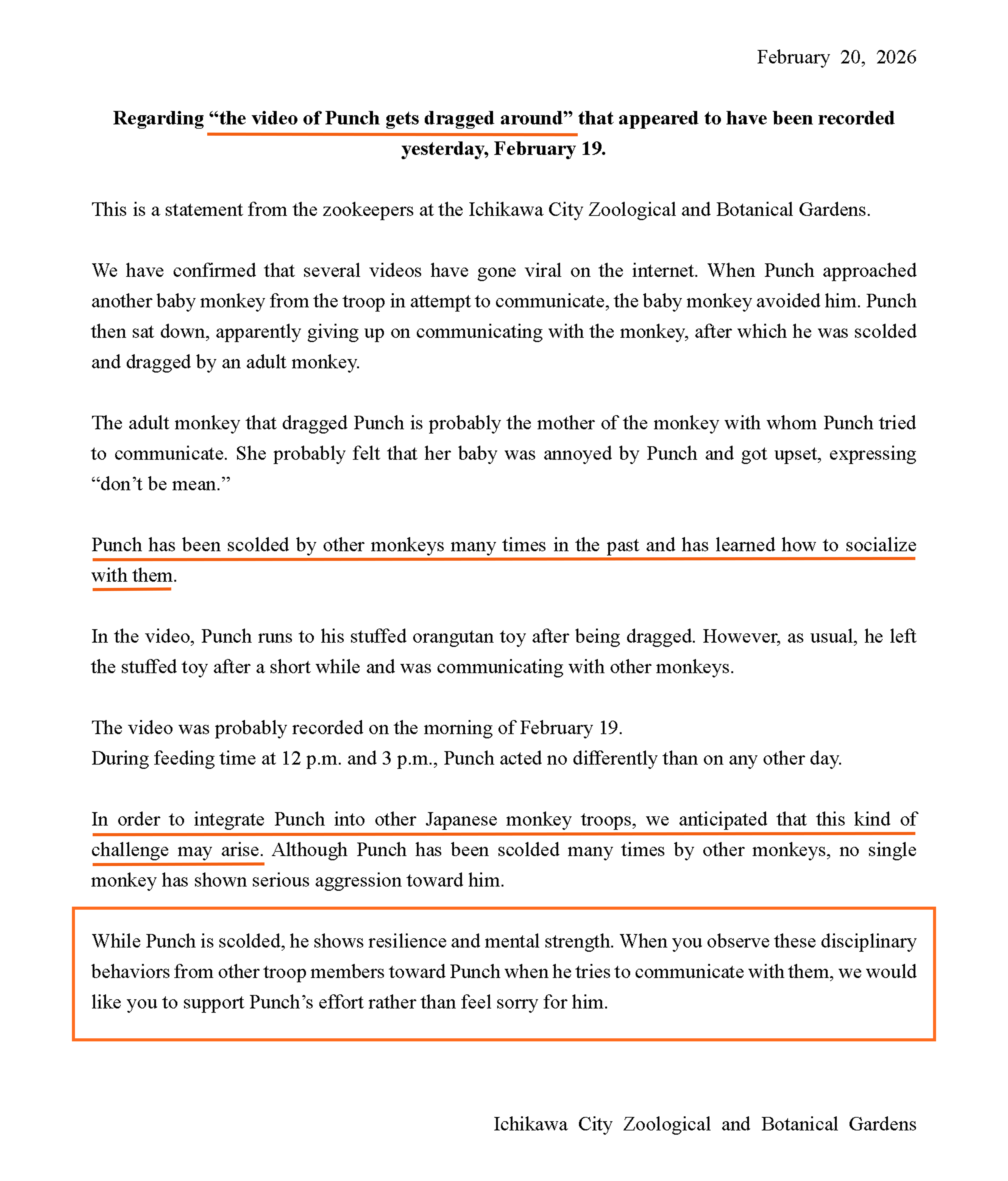
they also reframed the “bullying.” what people saw as cruelty was in macaque social terms, boundary-setting. “when punch approached another baby monkey from the troop in attempt to communicate, the baby monkey avoided him. after which he was scolded and dragged by an adult monkey who was probably the mother of the baby monkey.
the letter from the zoo also said: “while punch is scolded, he shows resilience and mental strength. when you observe these disciplinary behaviors from other troop members toward punch when he tries to communicate with them, we would like you to support punch’s effort rather than feel sorry for him.”
animal behaviour expert carla litchfield said: if punch cannot reintegrate into his troop, he risks being permanently othered. seen as a “messed-up, weird little guy” who never learned the social rules.
i think punch will be okay.
he’s trying.
on most days that’s the bravest thing any of us can say about ourselves.
poitu varen (i will go & come back),
akanksha
what do you think about punch the monkey?